← All courses3D track · Course 5 · Live course in English · Autodesk Maya
05
Facial Acting
Facial animation and lip sync: making the face act.
The fifth course of the 3D track is given to the face. On one side the character's acting choices, on the other the technique for posing and animating the parts of the face, up to lip sync. For the first time you work with a character that has a full facial rig, and you make a spoken shot on an audio track you choose yourself.
Prerequisite · Pantomime, or an equivalent level assessed by the teaching board
Maximum 5 students per classIndividual review, 20–30 minA spoken shot on audio you choose
you have finished Pantomime and want to carry acting from the body to the face;
you are interested in lip sync and in how word, breath and expression work together;
you want to learn how the parts of the face — eyes, brows, mouth, jaw — combine to convey emotion, down to the subtlest shades;
you want a facial acting shot, a monologue, for your reel.
What you should already be able to do
If you come from course 4, finishing Pantomime is the natural way into Facial Acting.
If you come from outside Vivo, send us your showreel: the teaching board looks at it and tells you where to come in. It should show that you have taken in the principles of pantomime and body acting.
You need to be able to build an acting shot without dialogue with clear poses and deliberate acting choices.
No experience with a facial rig is needed: the course starts from building expressions.
Student work
A face that speaks: student shots.
A selection of work made during Facial Acting.
Valerio Presciani
Gianmichele Manca
Elena Zaretti
The programme
Eleven weeks, from expressions to a monologue
The course moves through four phases: first the face at rest, then the face speaking, then the change of emotion, and finally a shot of your own on audio you choose. Every phase ends with a hand-in and an individual review.
1Phase
Posing the face and expressions
How a facial rig is built and how a clear expression is composed so that it reads on camera. The work here is on the pose, not yet on movement: the basic expressions and their shades, and the asymmetry that makes a face look alive.
Facial rigBasic expressionsAsymmetryReading on camera
2Phase
Phonemes and lip sync
The step from a face at rest to a face speaking: reading the audio track, mouth shapes, jaw and tongue, and the rhythm that holds word and breath together.
Reading the audioPhonemesLip syncJaw and tongue
3Phase
Changing emotion
A character going from one emotion to another: the transition is where facial acting shows most. You work on the timing of the change and on the way eyes, brows and mouth move together.
TransitionsTiming of emotionEyes and brows
4Phase
Your shot: a monologue
On an audio track you choose, guided by your instructor, you make a spoken shot. Acting choices, lip sync and expressions come together in a production flow: planning, blocking, splining and polishing.
Choosing the audioBlockingSpliningPolishing and delivery
What you take away
The face as an acting instrument.
The close-up is one of the tests a character animator is asked for most often. After Facial Acting you can make a complex face act, from a single glance to the lip sync of a monologue.
Posing the faceExpressions and their shadesAsymmetryPhonemes and lip syncThe rhythm of word and breathChanging emotionHow the parts of the face work togetherActing choicesPlanning a spoken shot
How you study
A typical week
Two live sessions a week: the class, given to the subject and to the work you are about to do, and the review, where the instructor spends twenty to thirty minutes on each student's work. Classes hold between two and five students.
Outside the classes you need around twenty hours a week for exercises, reference and practice of your own. Recordings, annotations and materials stay available after the course ends. The days and times of your class are told to you before you enrol.
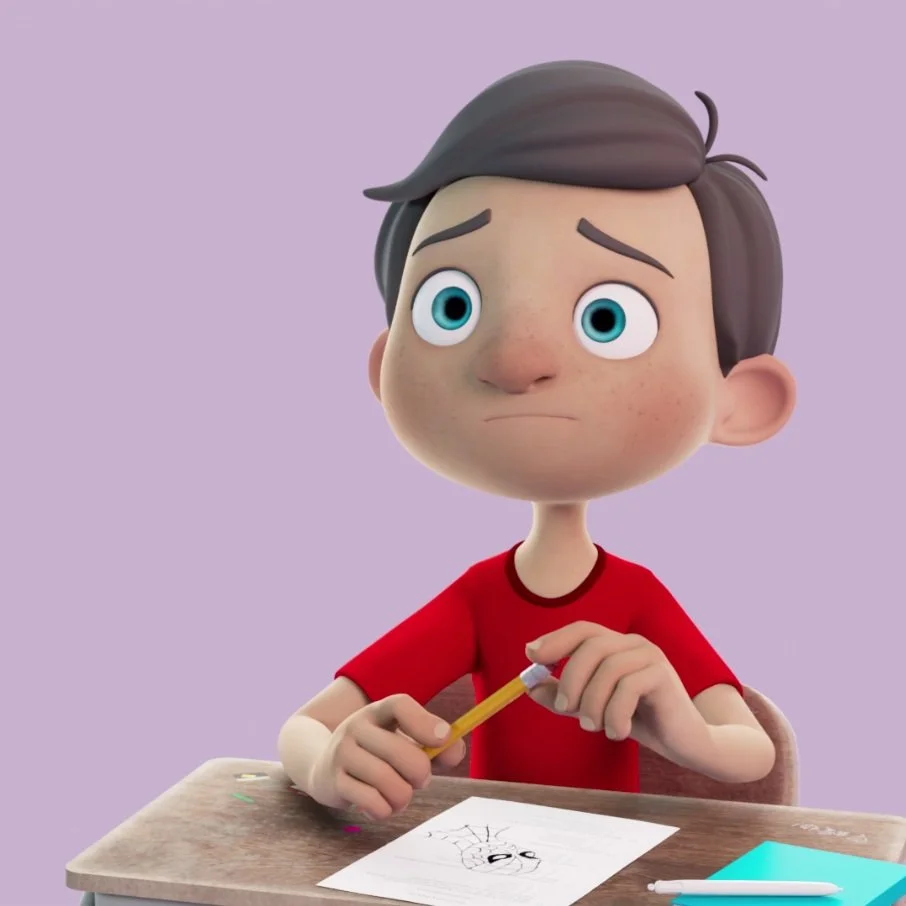
In Facial Acting you work for the first time with a character that has a full facial rig. Margherita has an advanced facial rig; Paul is the main male character, with everything a performance needs; Ruben is built for facial acting shots.
Vivo's characters are made specifically for the courses and stay available to you after the course ends.
MargheritaPaulRuben
Along with Maya you also get a licence for animBot, the professional animation toolset, for the whole length of the course.
Maya included for the whole length of the course. On completion you receive a certificate of attendance from Autodesk.
When it starts
Next term: Autumn — classes from October to December, enrolment closes on 24 September. Classes of two to five students.
The exact days and times depend on the class and are told to you before you enrol, so you can check them before confirming your place. Our instructors work in different time zones, so a class is scheduled around the instructor teaching it and the students in it. All the dates of the year are in the enrolment calendar. If you did not take course 4 with Vivo, allow time for the showreel assessment before enrolling.
Yes, if you already have the level it asks for. If you have not finished Pantomime with Vivo, send your showreel: the teaching board looks at it and tells you which course fits. The call with one of the founders is where we work out where you are starting from.
What is the difference between Facial Acting and Advanced Acting?
Facial Acting works on the face: expressions, phonemes, lip sync and changes of emotion. Advanced Acting puts face and body together in a complete full-figure shot, with dialogue or a monologue.
Who chooses the audio track?
You do, with your instructor's guidance. It is the ground of the final shot: a monologue on which you build acting choices, lip sync and expressions.
Is lip sync done phoneme by phoneme?
Not every phoneme counts the same. In the course you learn to read and break down the audio, to choose the mouth shapes you actually need, and to hold word, breath and rhythm together.
Already have experience? Have your level assessed.
If you did not take Pantomime with Vivo, send us your showreel. The teaching board looks at your level, and the call is where we go through your goals, your availability and the path, so we can find the course that matches what you can already do.